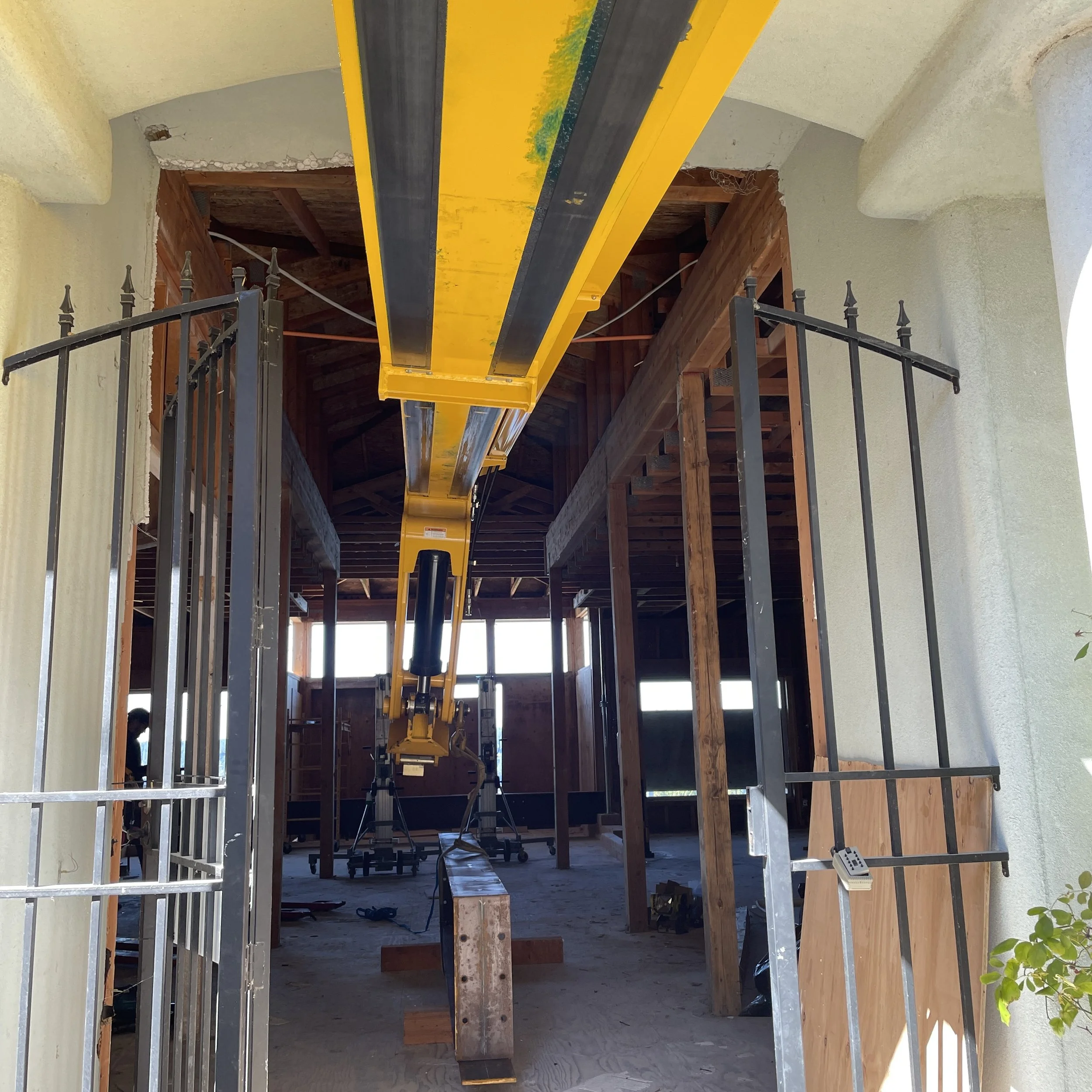
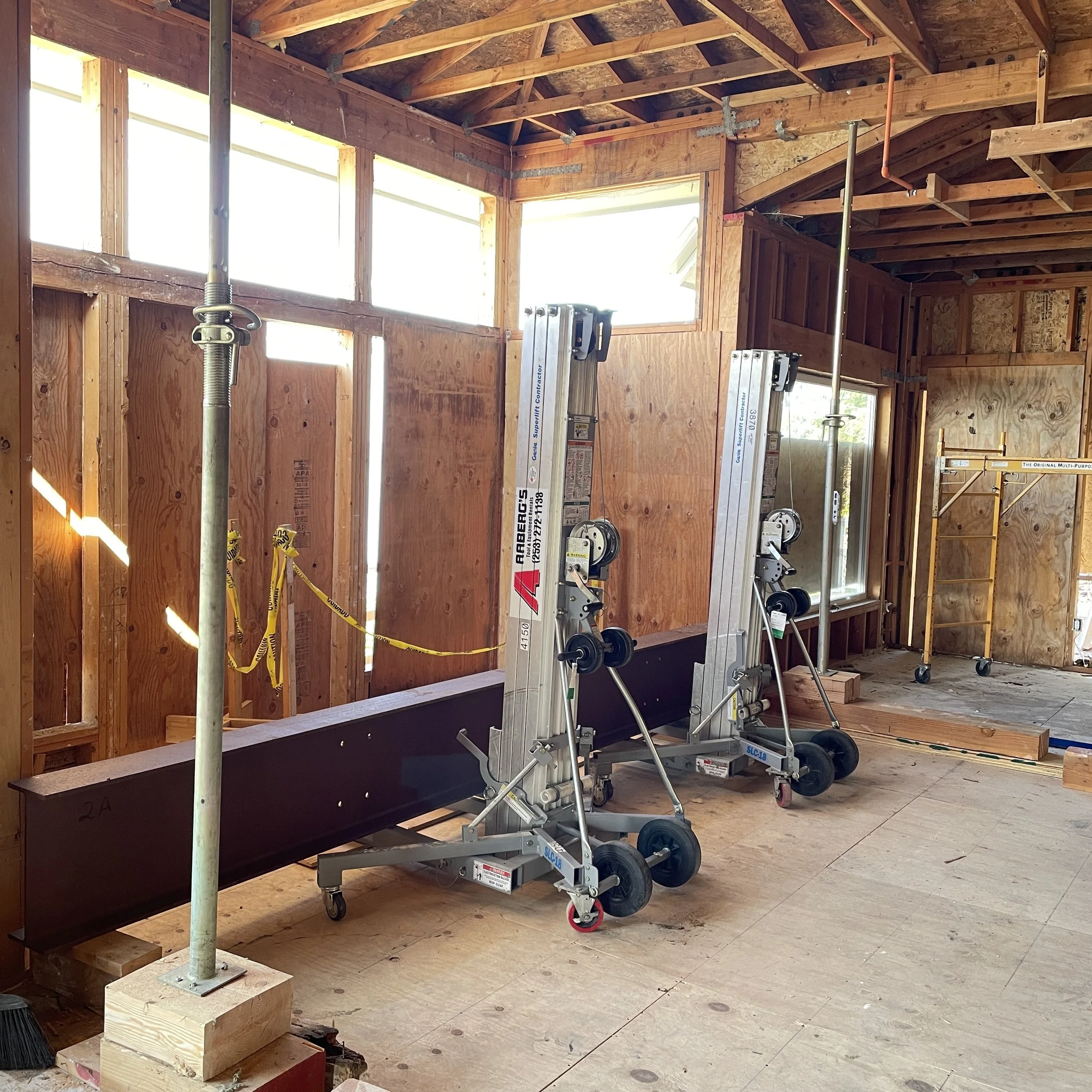
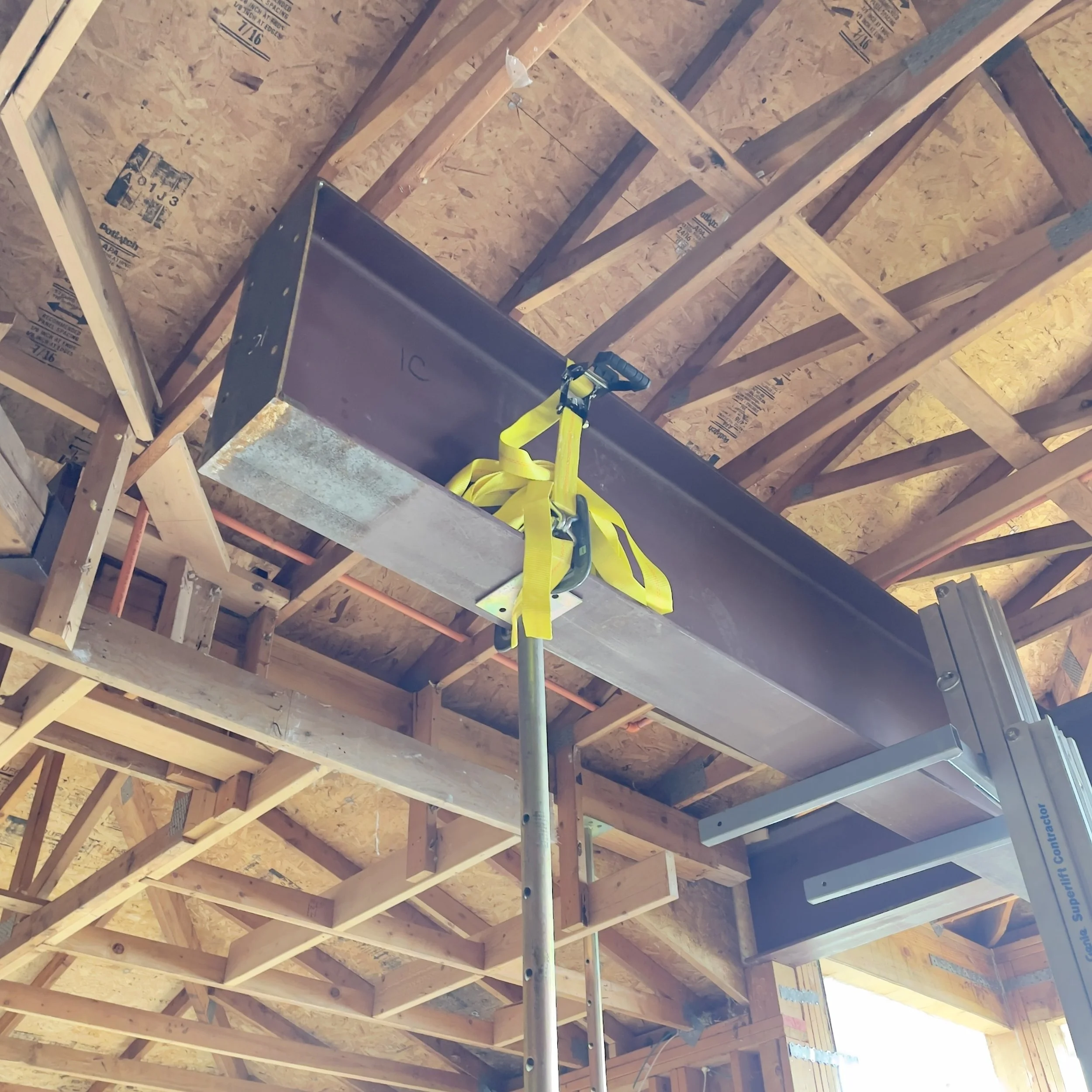
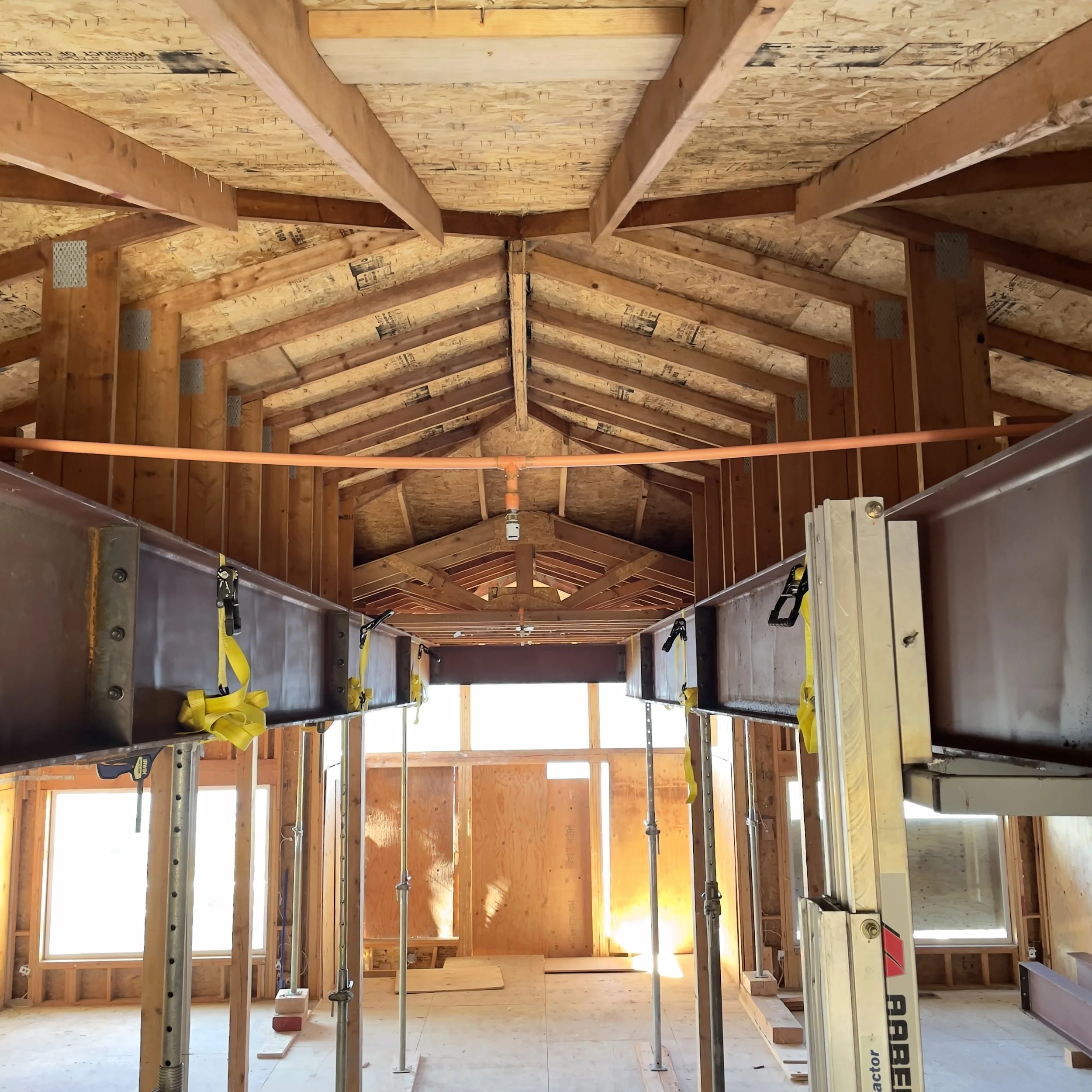
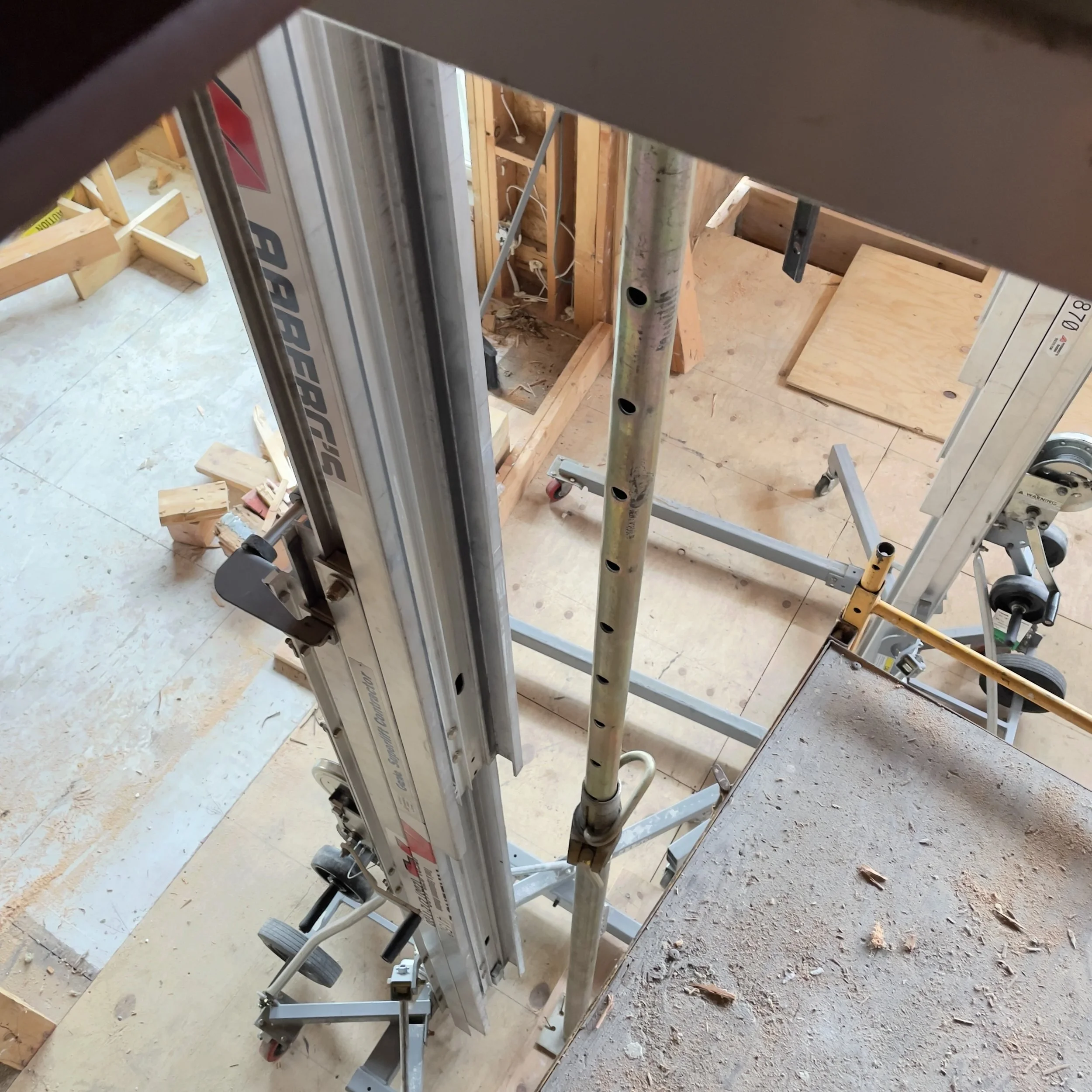
This project centers on the placement of large, custom-fabricated structural steel beams into an existing residential frame. Each beam arrived built to plan, drilled, coated, and ready to become a primary load-carrying element within the structure. The goal was clear: introduce new load paths, open the interior volume, and transfer weight cleanly through new bearing points without interrupting the stability of the building at any stage.
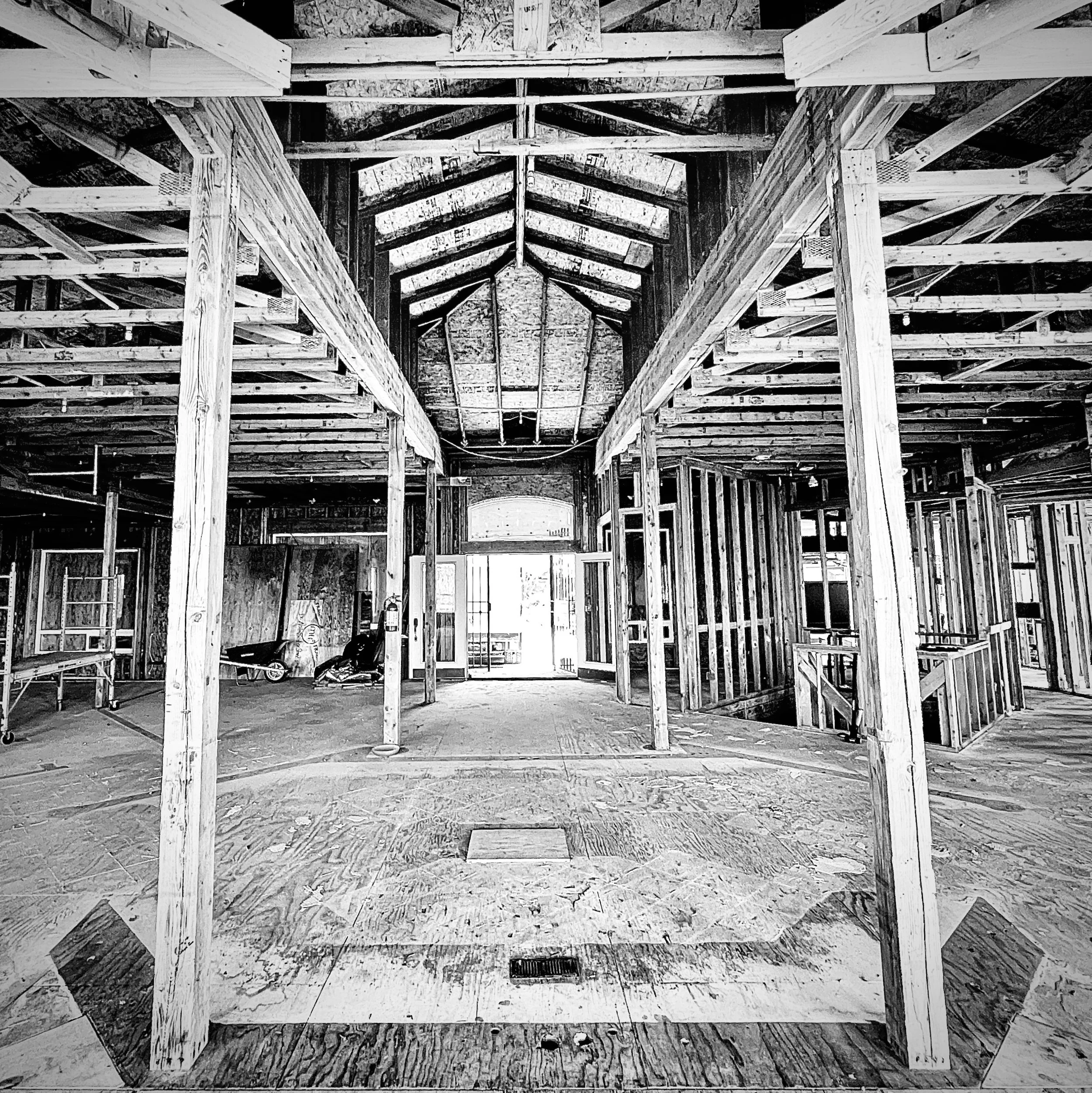
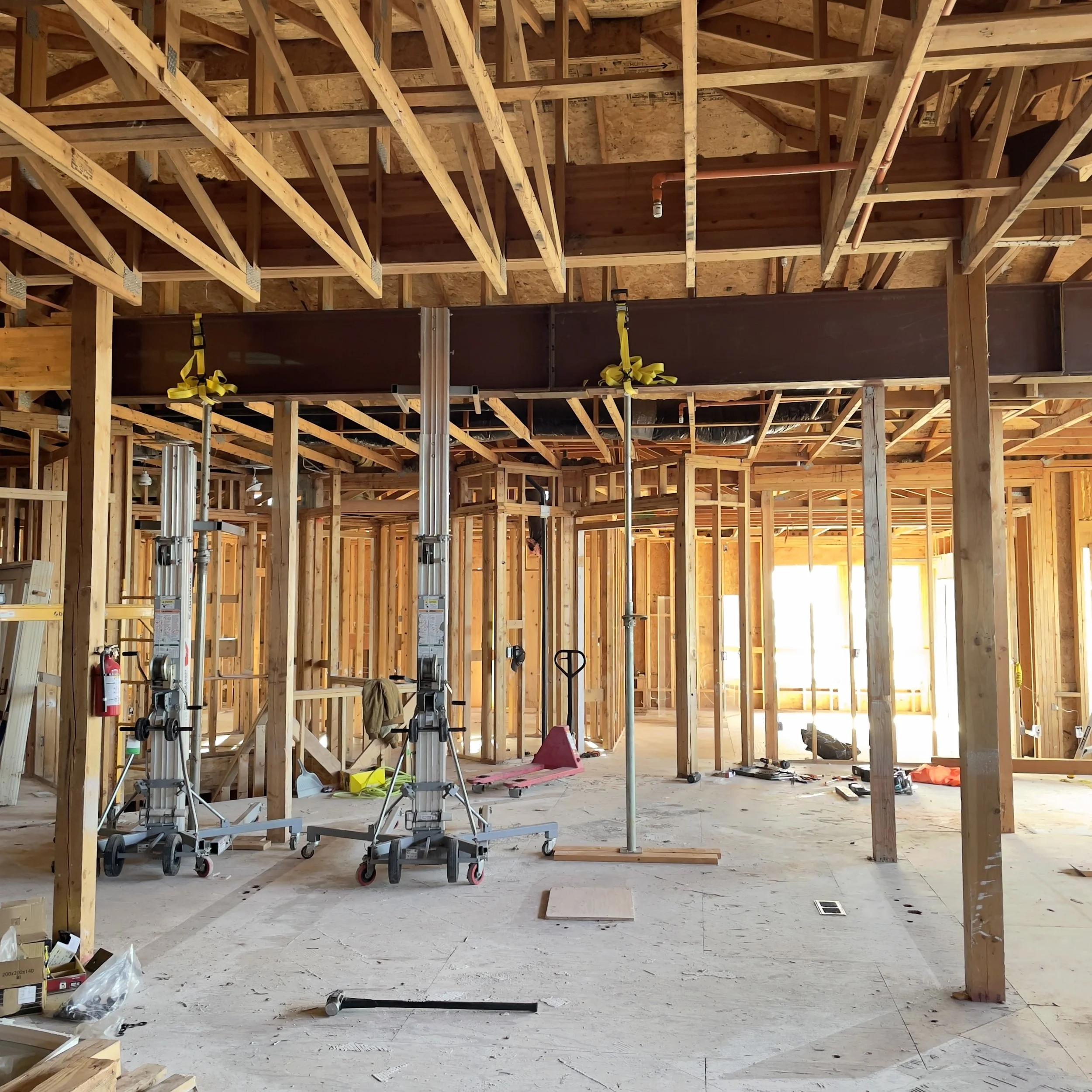
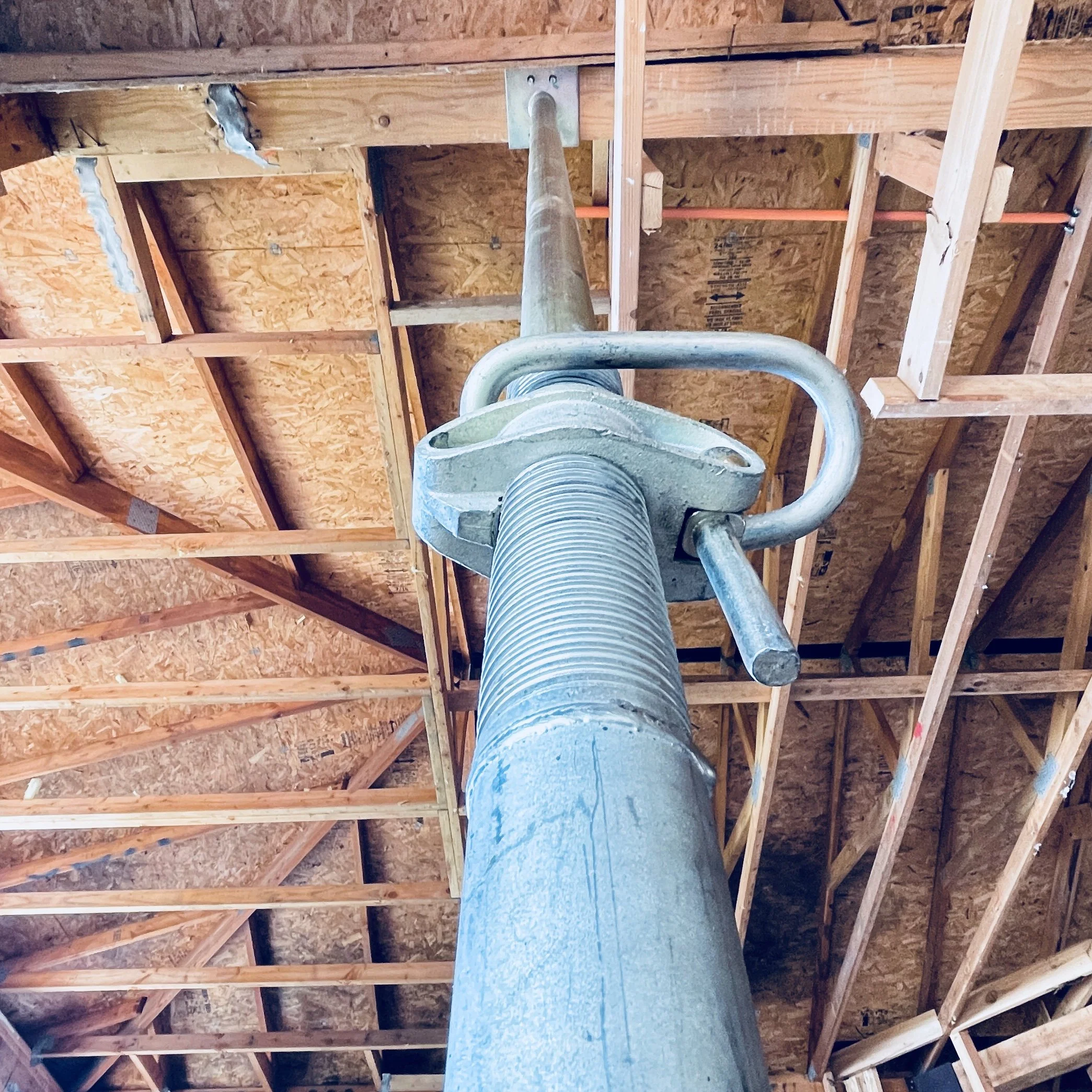
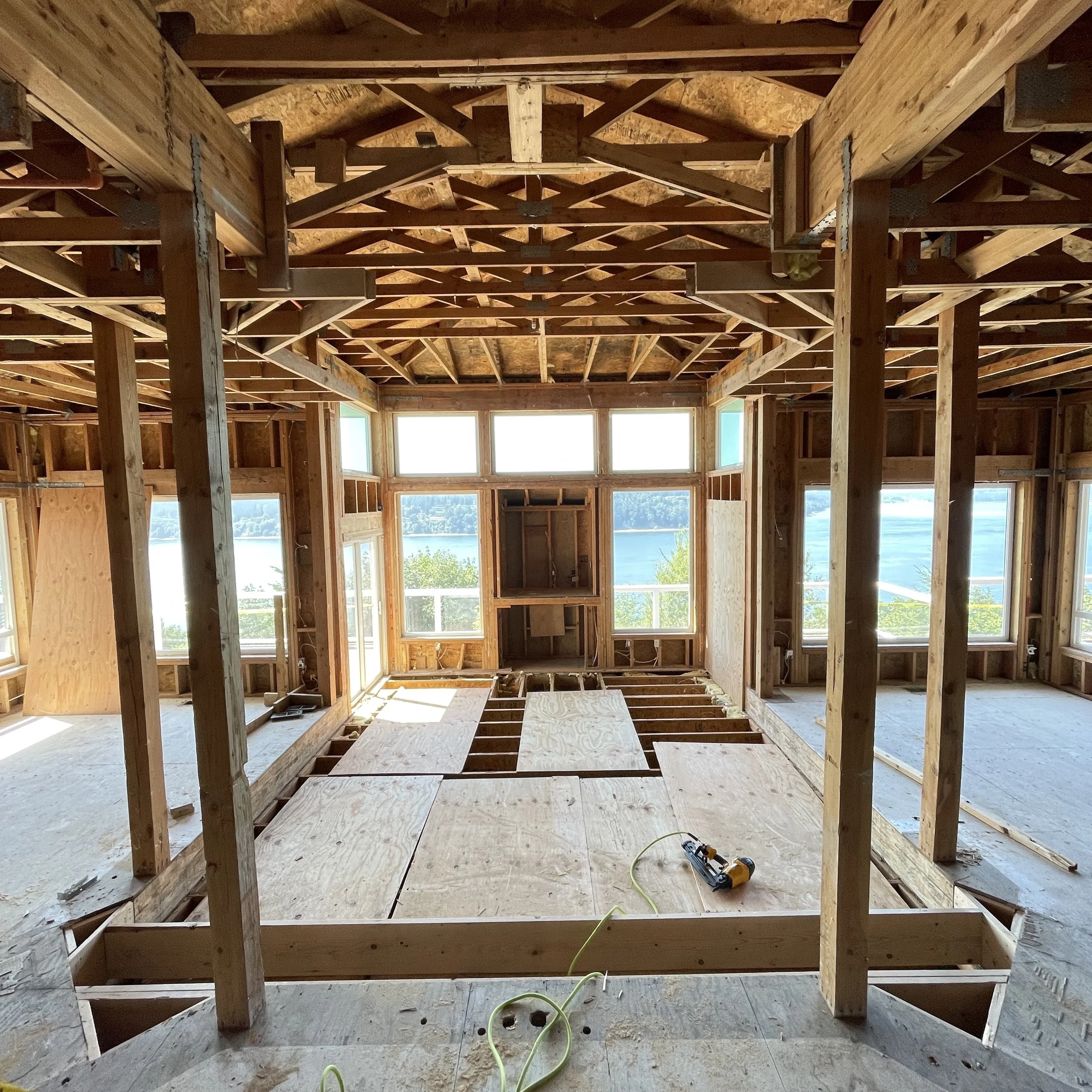
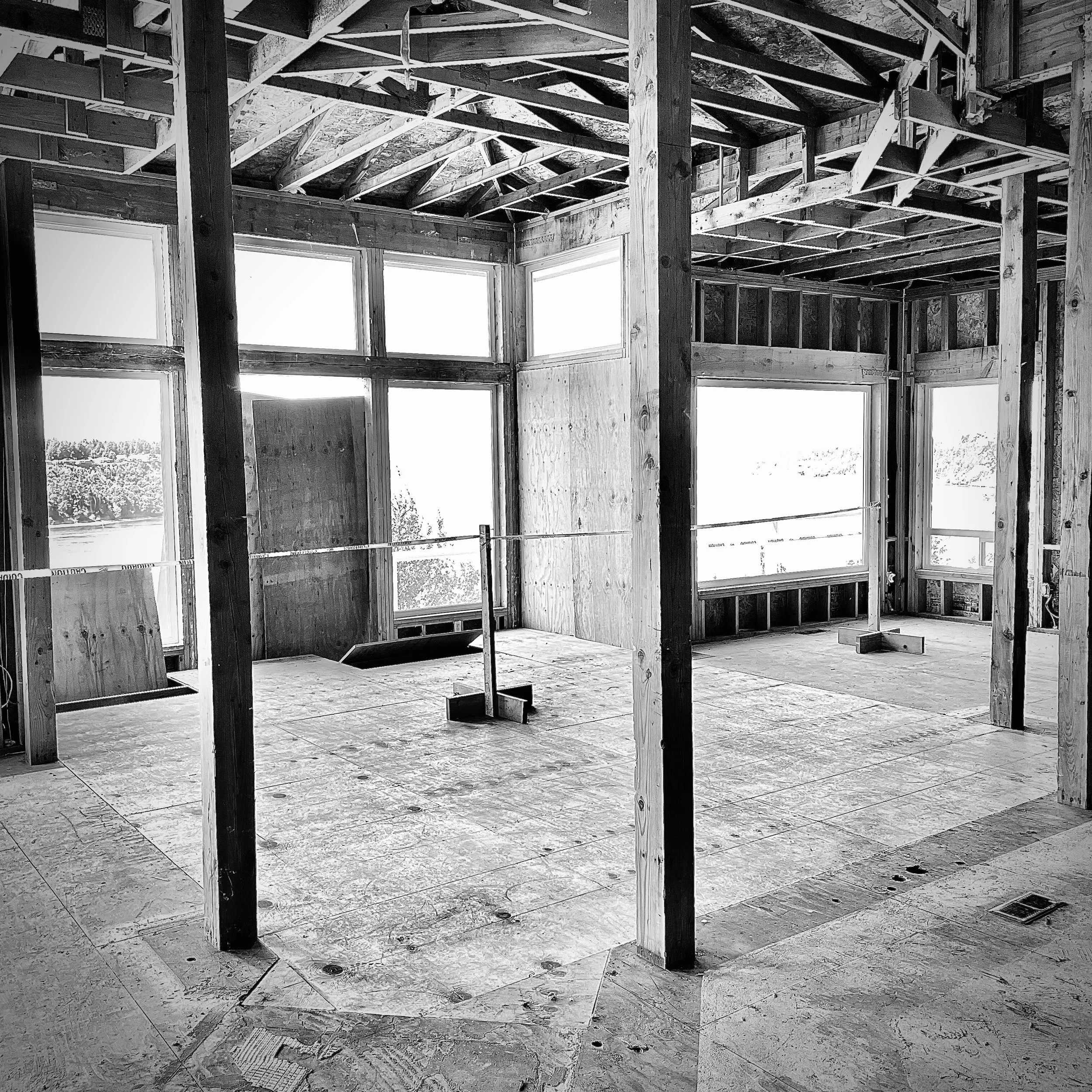
The work begins long before the first lift. Layout, sequencing, and access define everything. The structure was opened and read carefully—existing framing, spans, bearing conditions, and movement paths all understood as a single system. Temporary steel posts were installed in a controlled grid to carry the structure in its current state. These posts hold the building steady while the new beams move into position, maintaining load continuity throughout the operation.
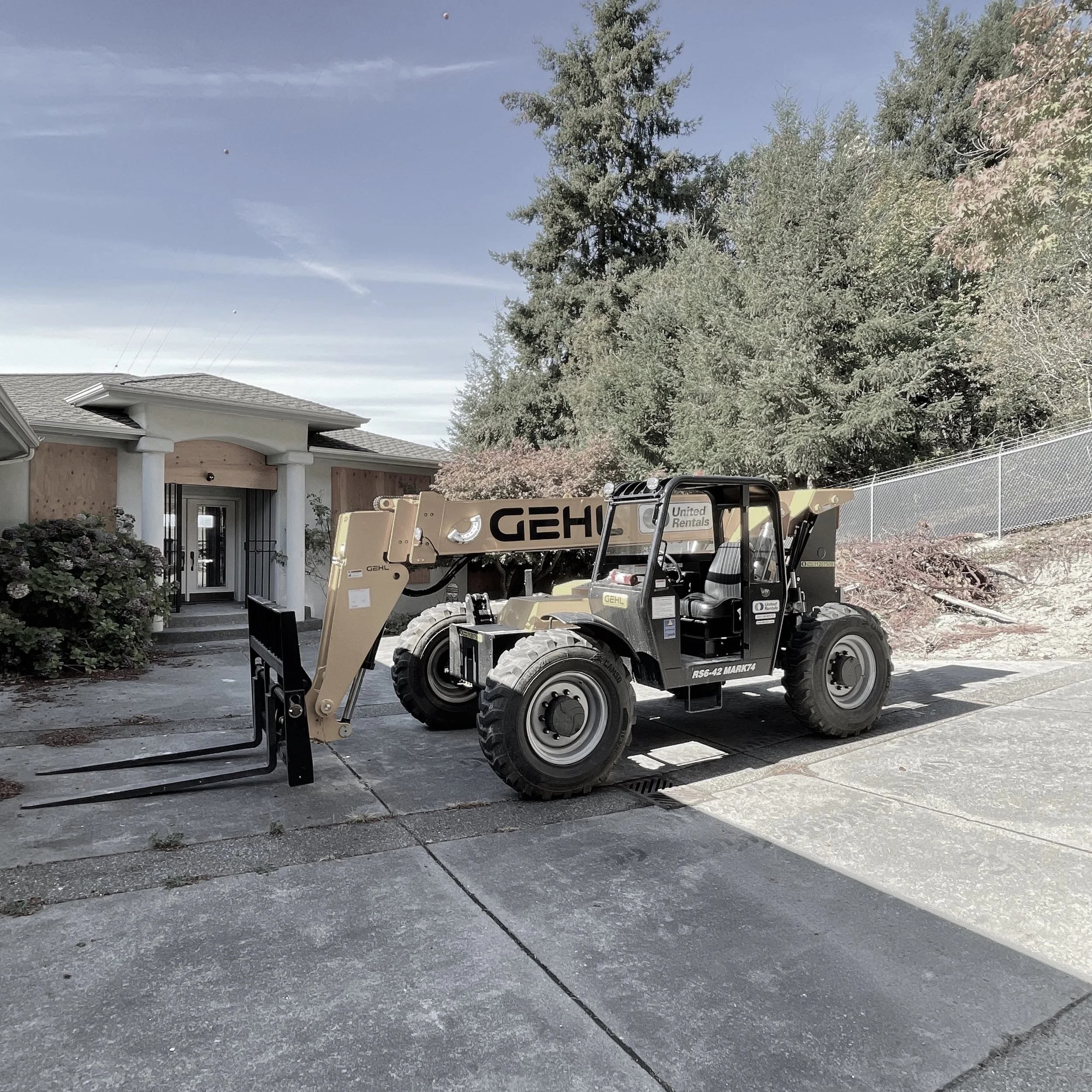
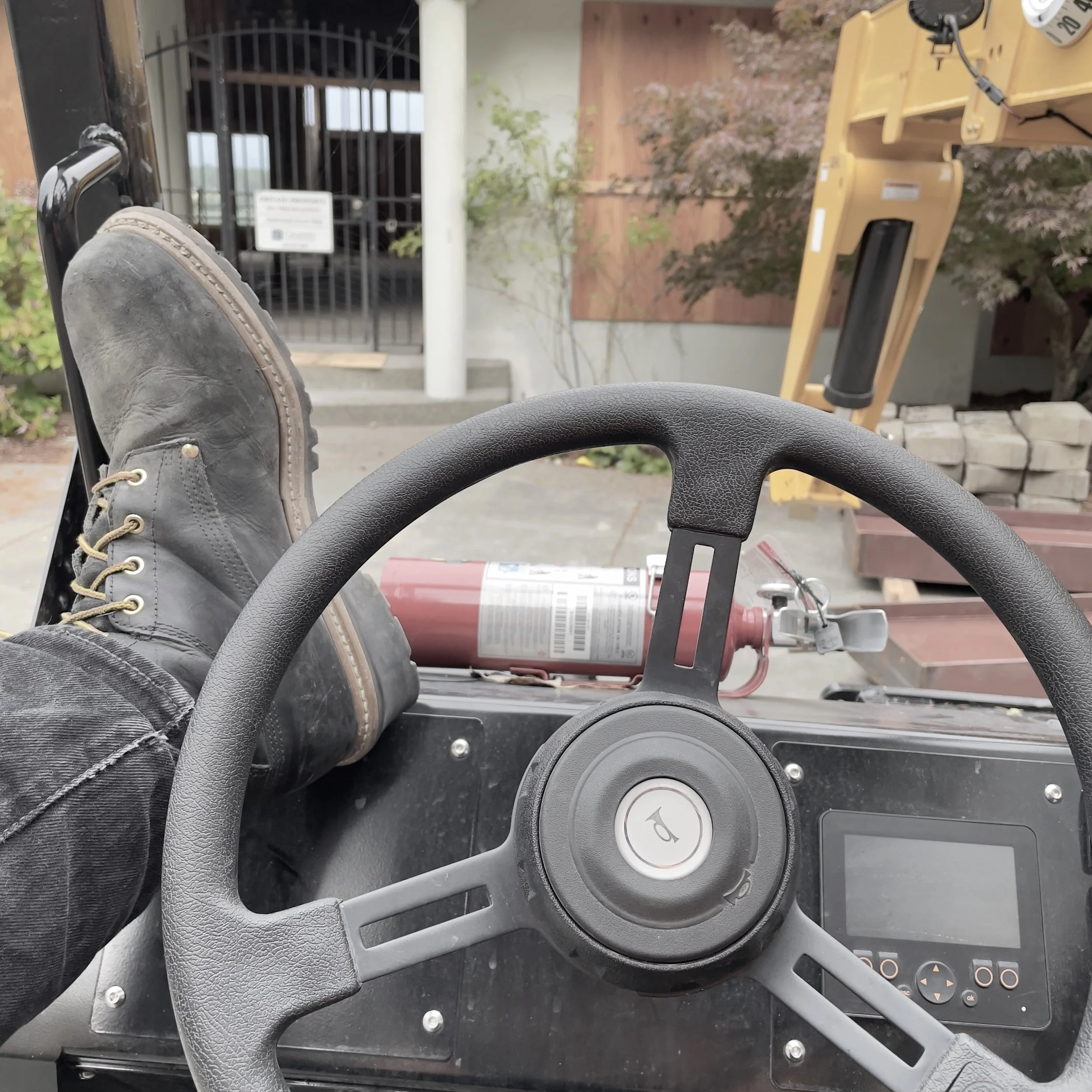
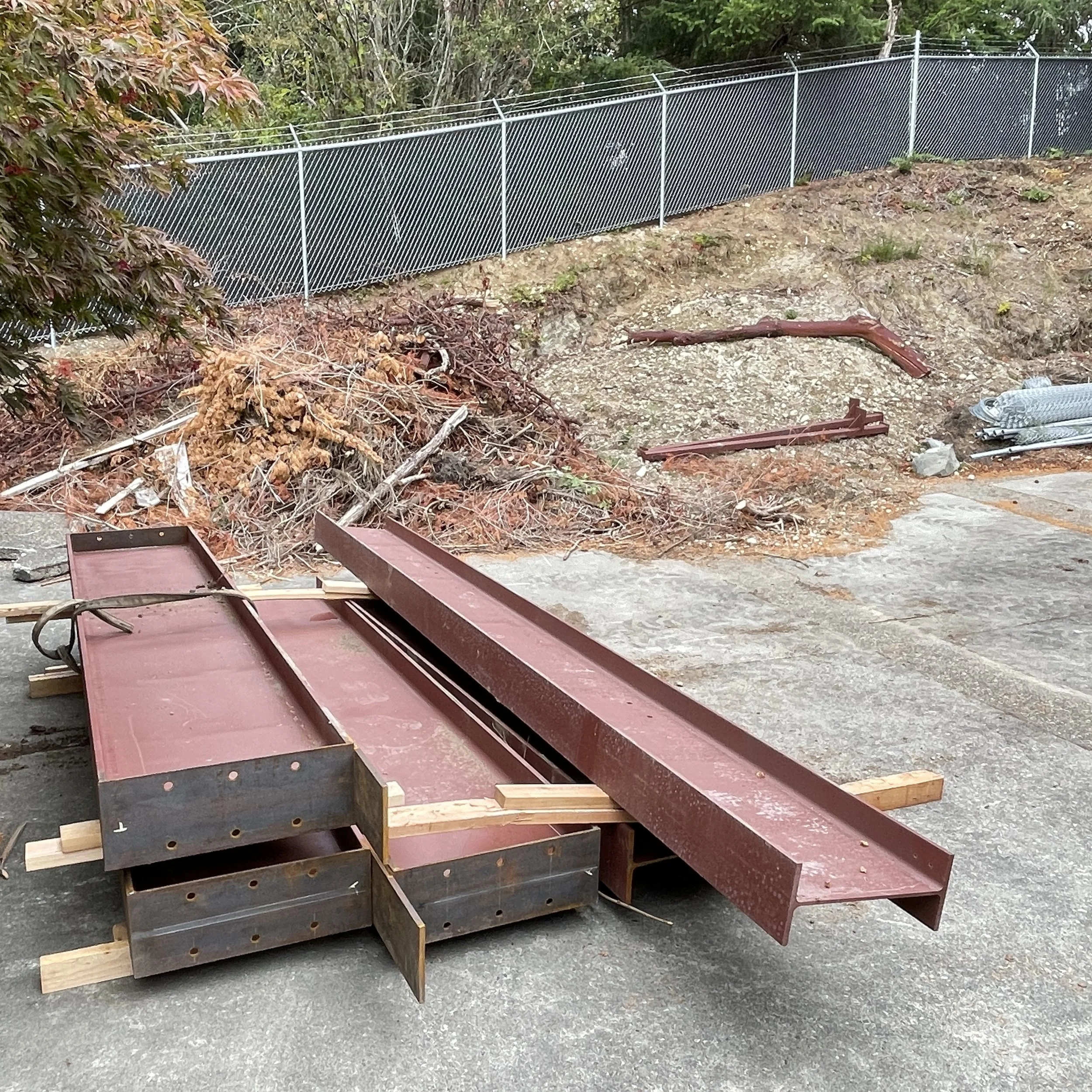
Material handling set the next phase. The beams were delivered to site and offloaded using a rented telehandler. The machine carried each beam into the structure as far as headroom allowed, placing them on cribbing inside along their intended path. From there, the work transitioned from machine movement to hand-controlled precision.
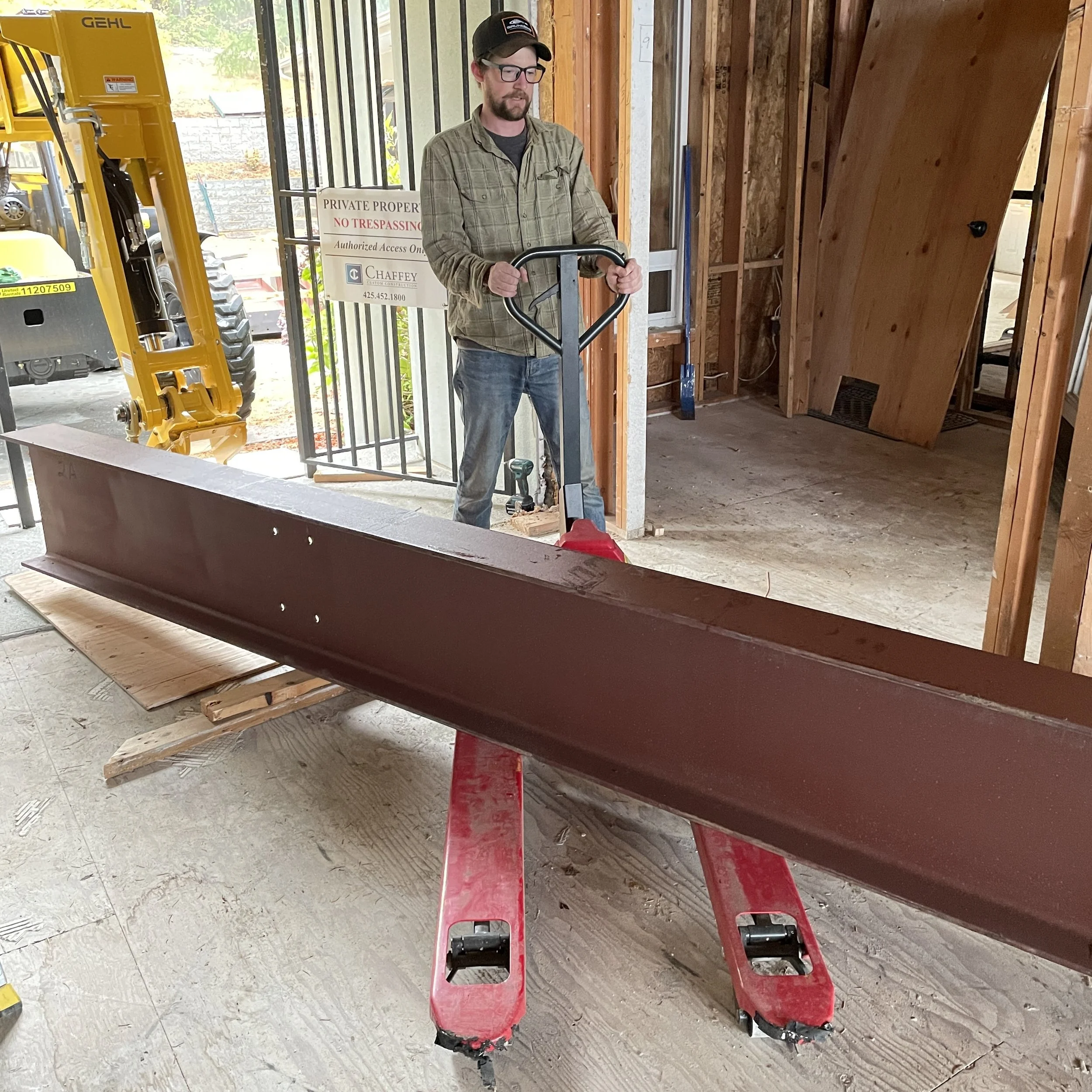
Each beam was brought into approximate position using floor jacks and manual alignment. The steel was raised incrementally to a working height, guided into line beneath its final bearing points. At this stage, the process becomes controlled and deliberate. The beam responds to small adjustments, and alignment is established before any vertical lift begins.
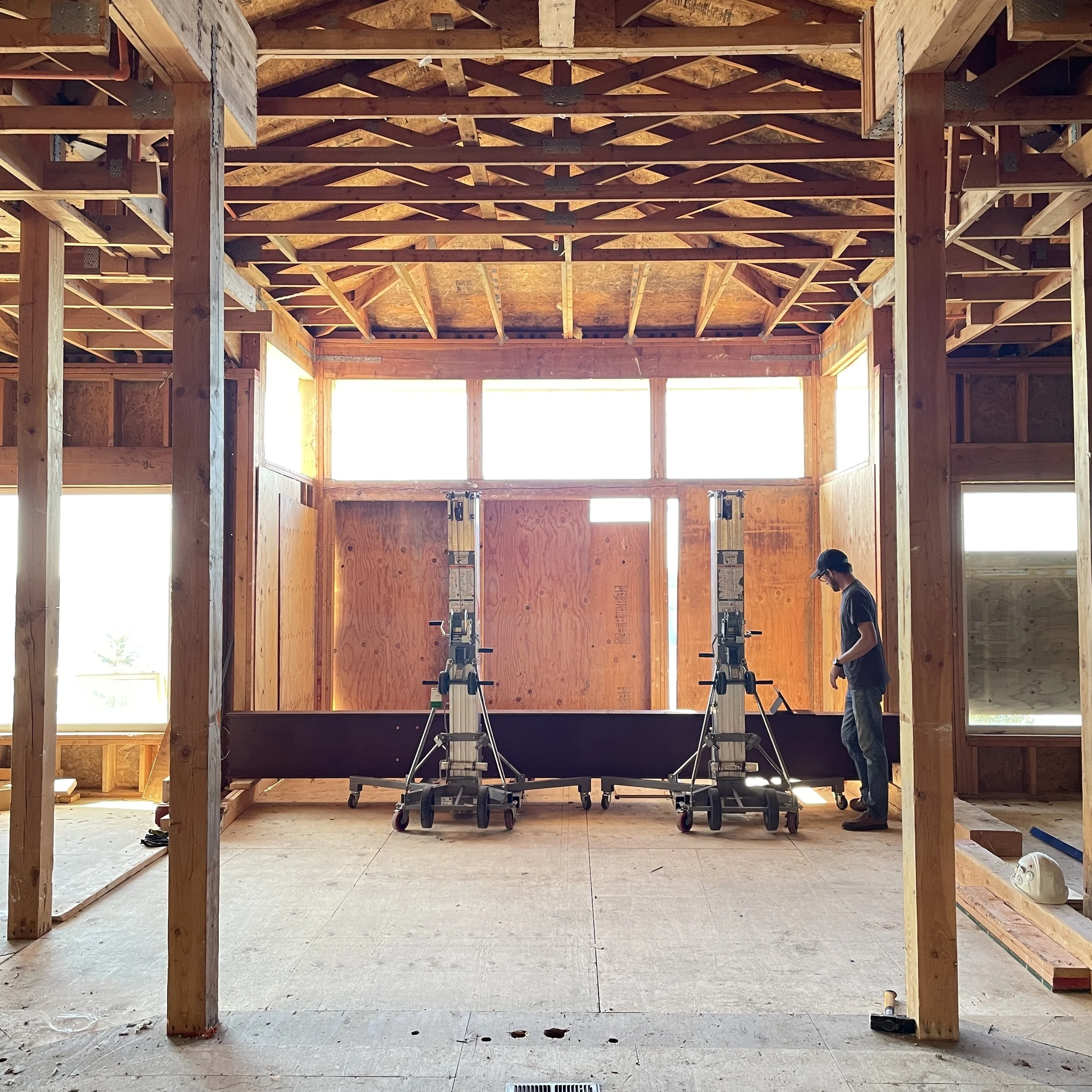
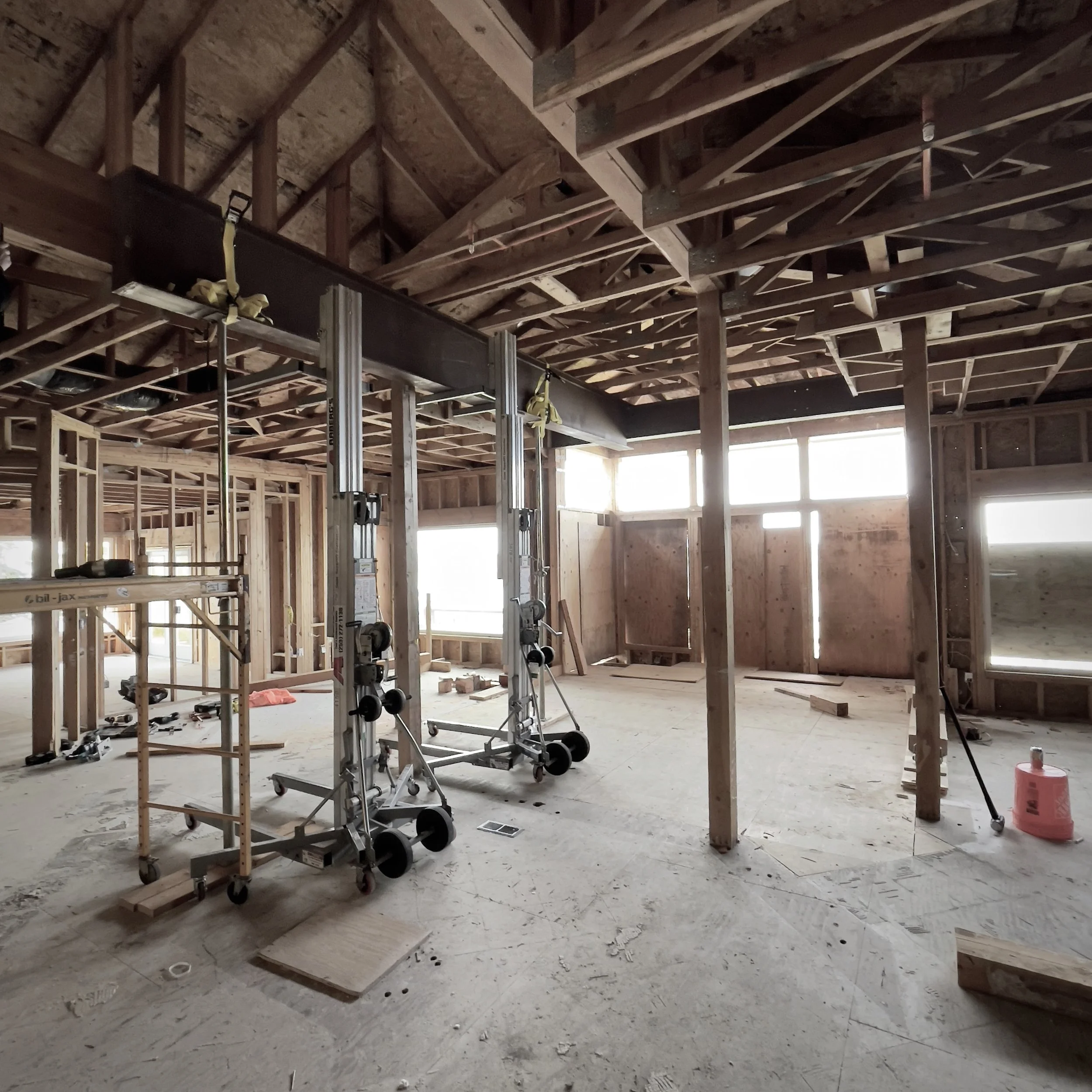
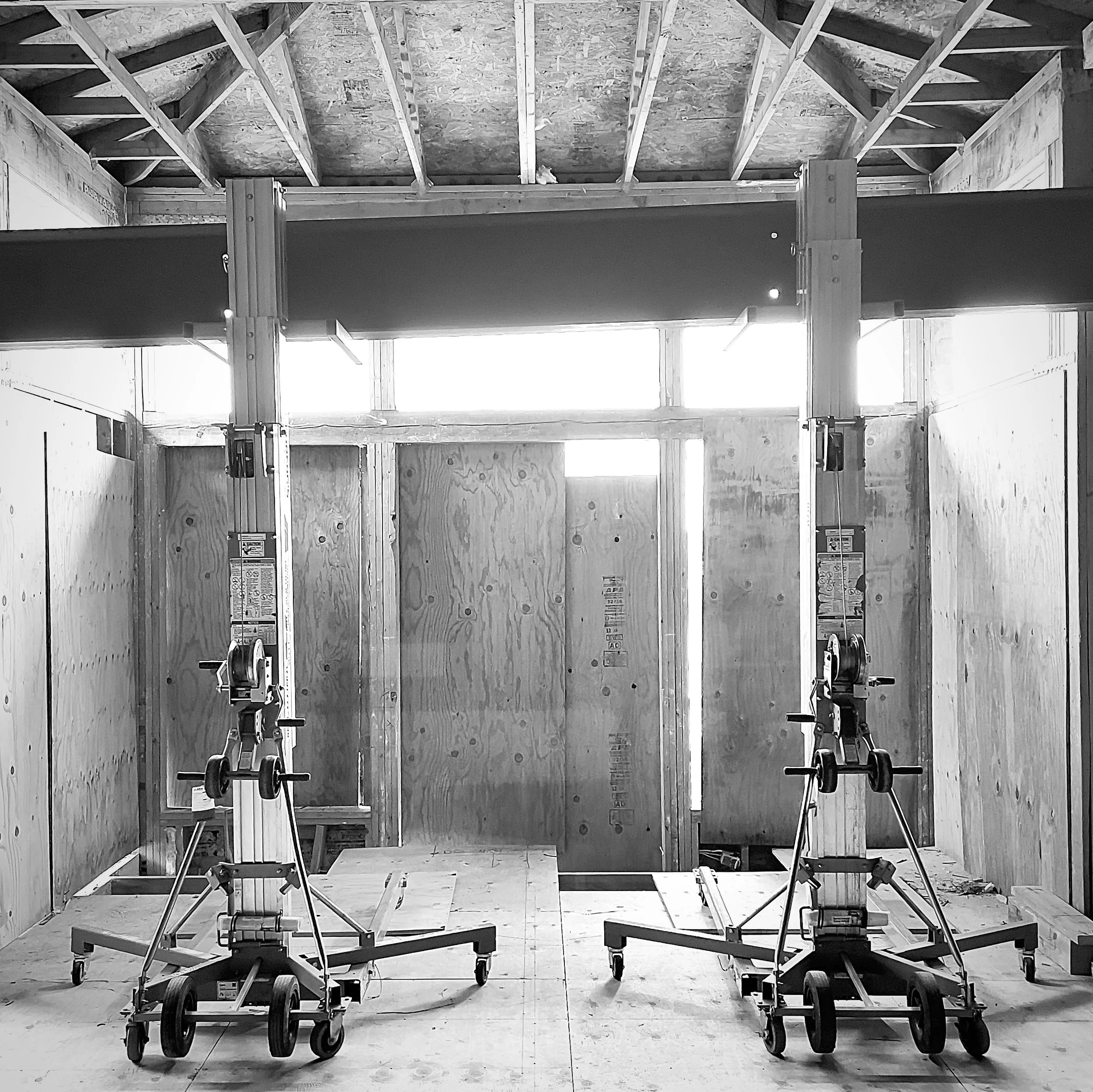
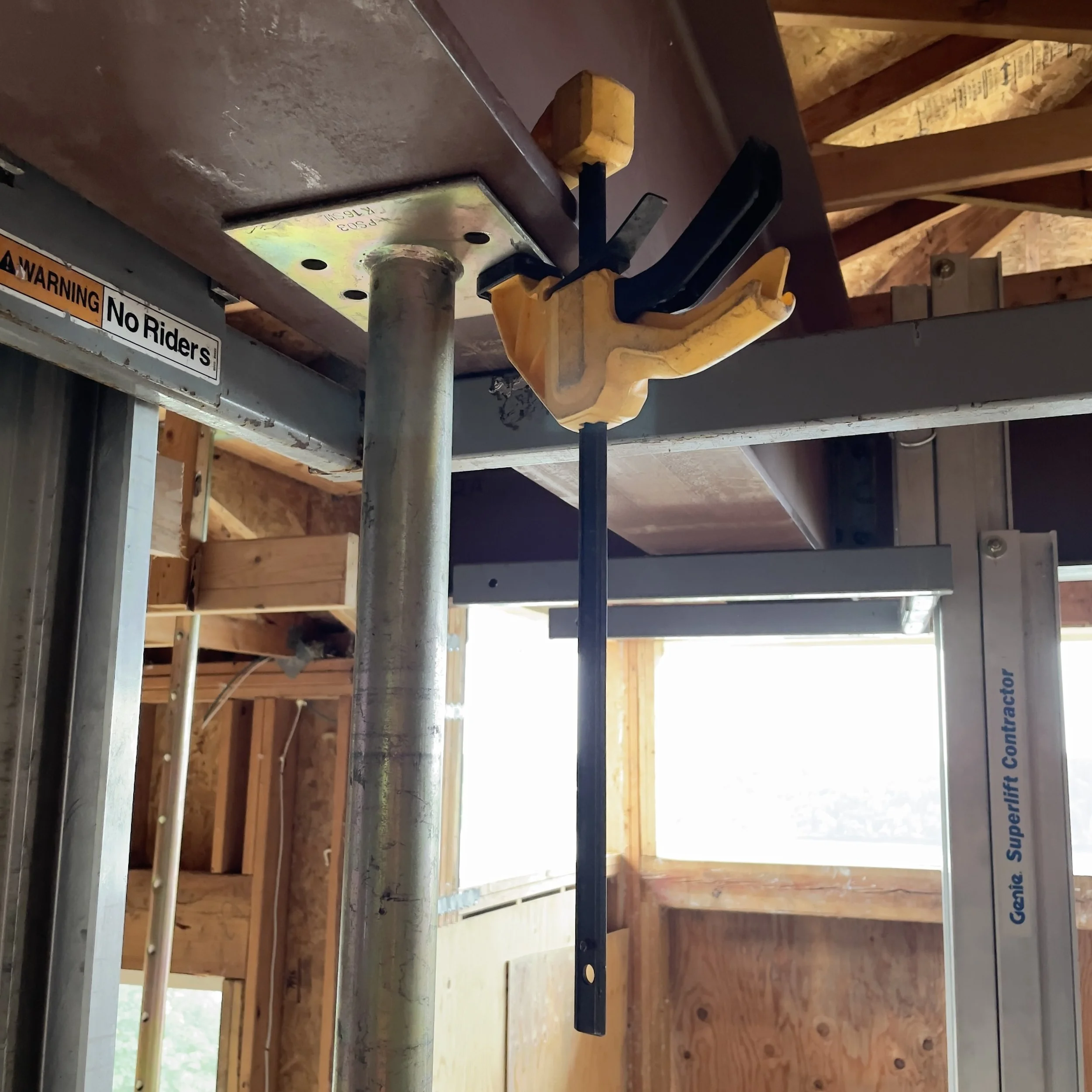
The primary lift was completed using dual material lifts—pump jacks operating in tandem. These lifts raise the beam smoothly and evenly, maintaining balance across the full length of the steel. Each increment of height is controlled, with constant attention to alignment, load distribution, and bearing contact. Temporary posts remain active during this phase, supporting the surrounding structure while the new beam approaches final elevation.
Once the beam reached height, it settled directly into its bearing points. The fit was clean and exact, guided by the preparation that came before. From there, connections were installed to specification—plates, bolts, and hardware locking the beam into the structural system. At that moment, the new load path becomes active, and the structure transitions into its updated form.
The entire operation moves with a steady rhythm. Two workers, a telehandler, and a set of mechanical lifts carry heavy structural steel from delivery to full integration. The process holds a clear sequence: stabilize, stage, align, lift, set, secure. Each step builds on the last, and the work unfolds with control from start to finish.
Bay Window Framing and Floor Reconstruction
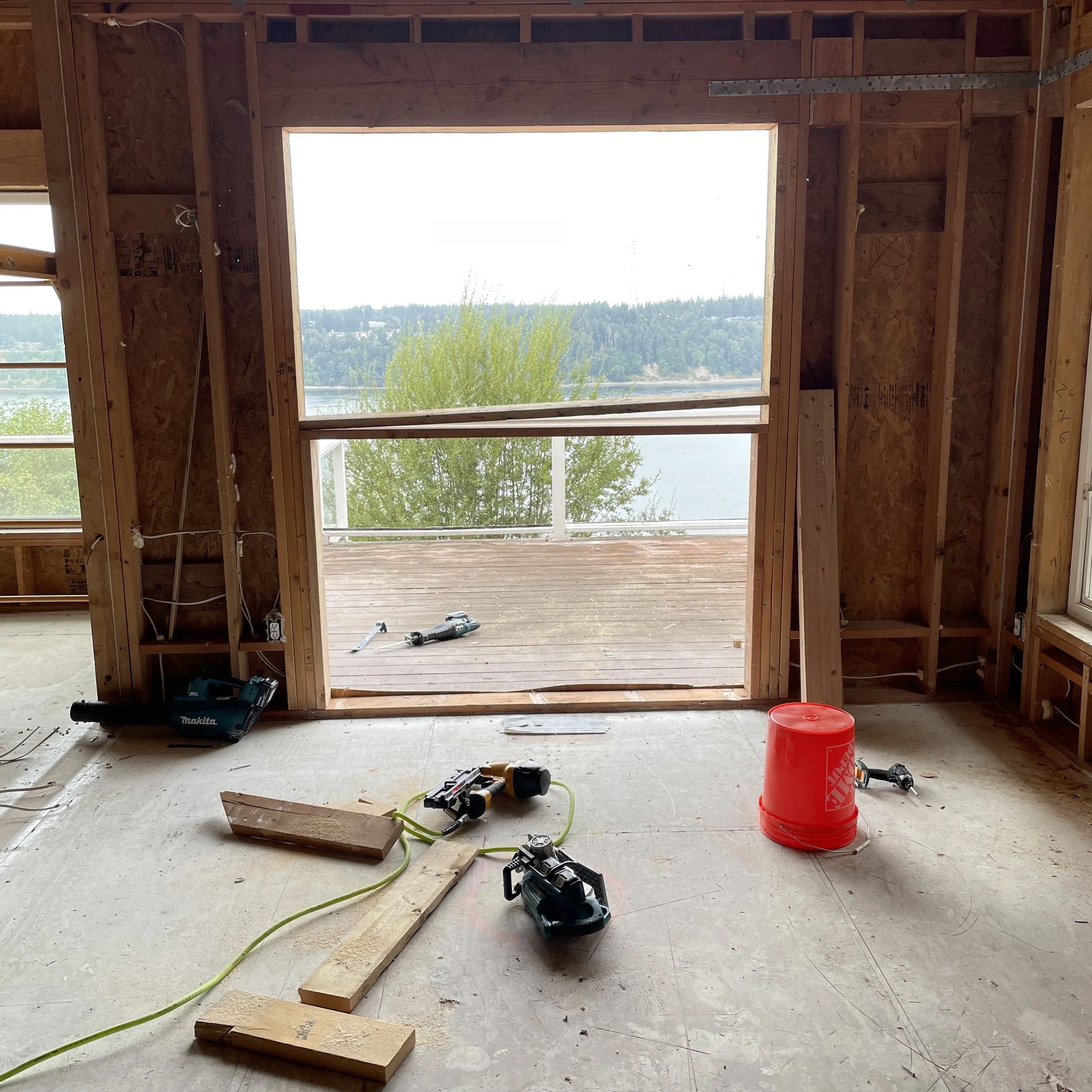
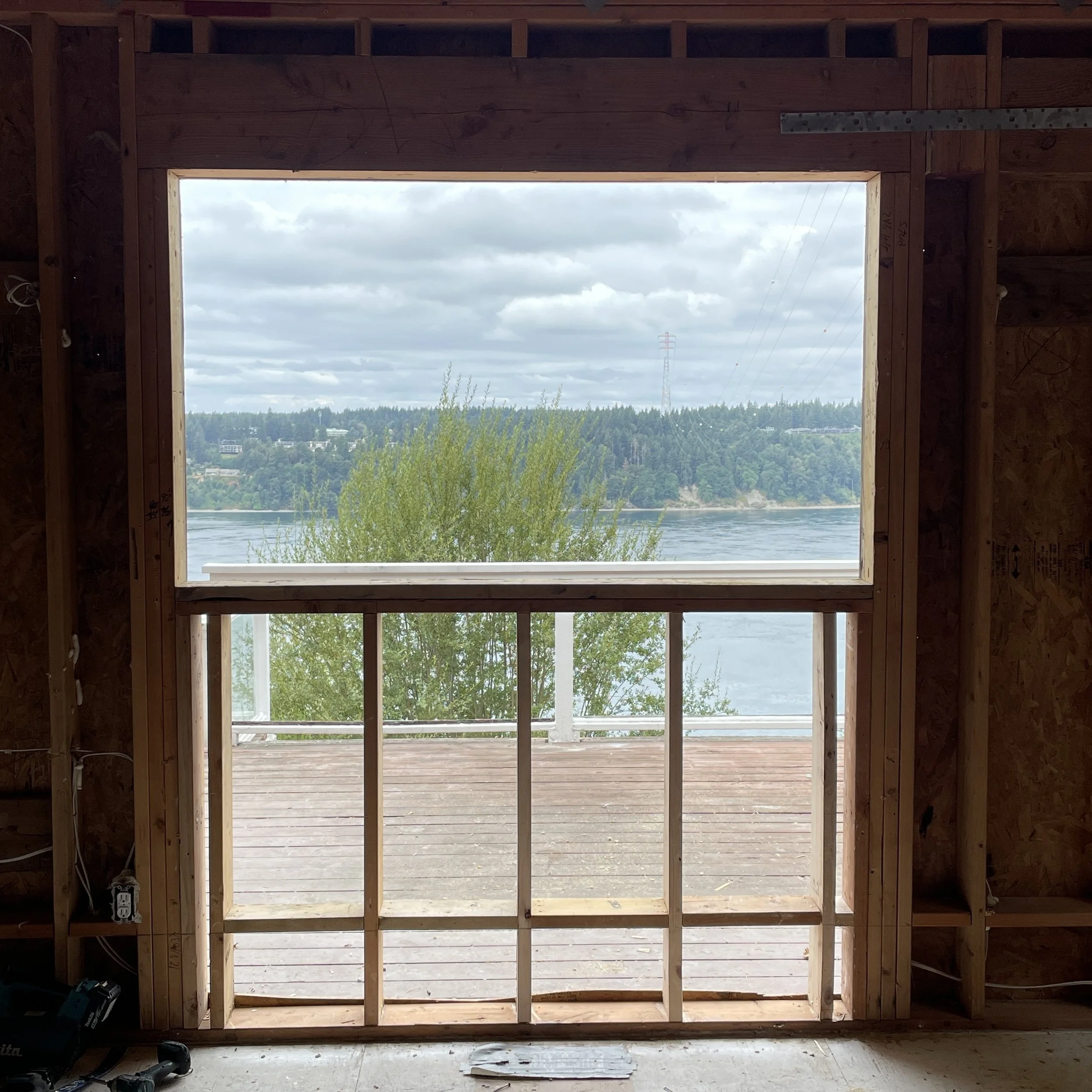
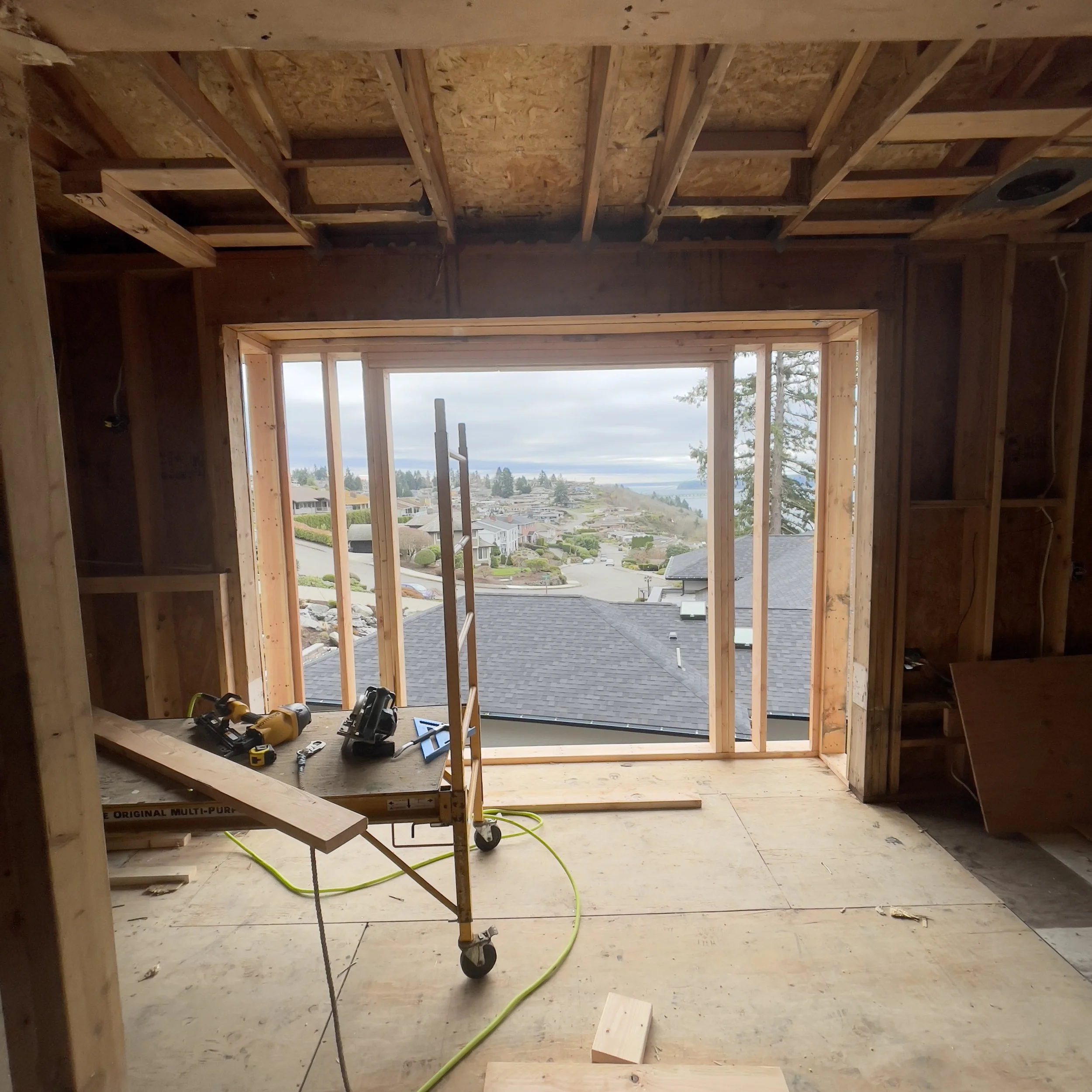
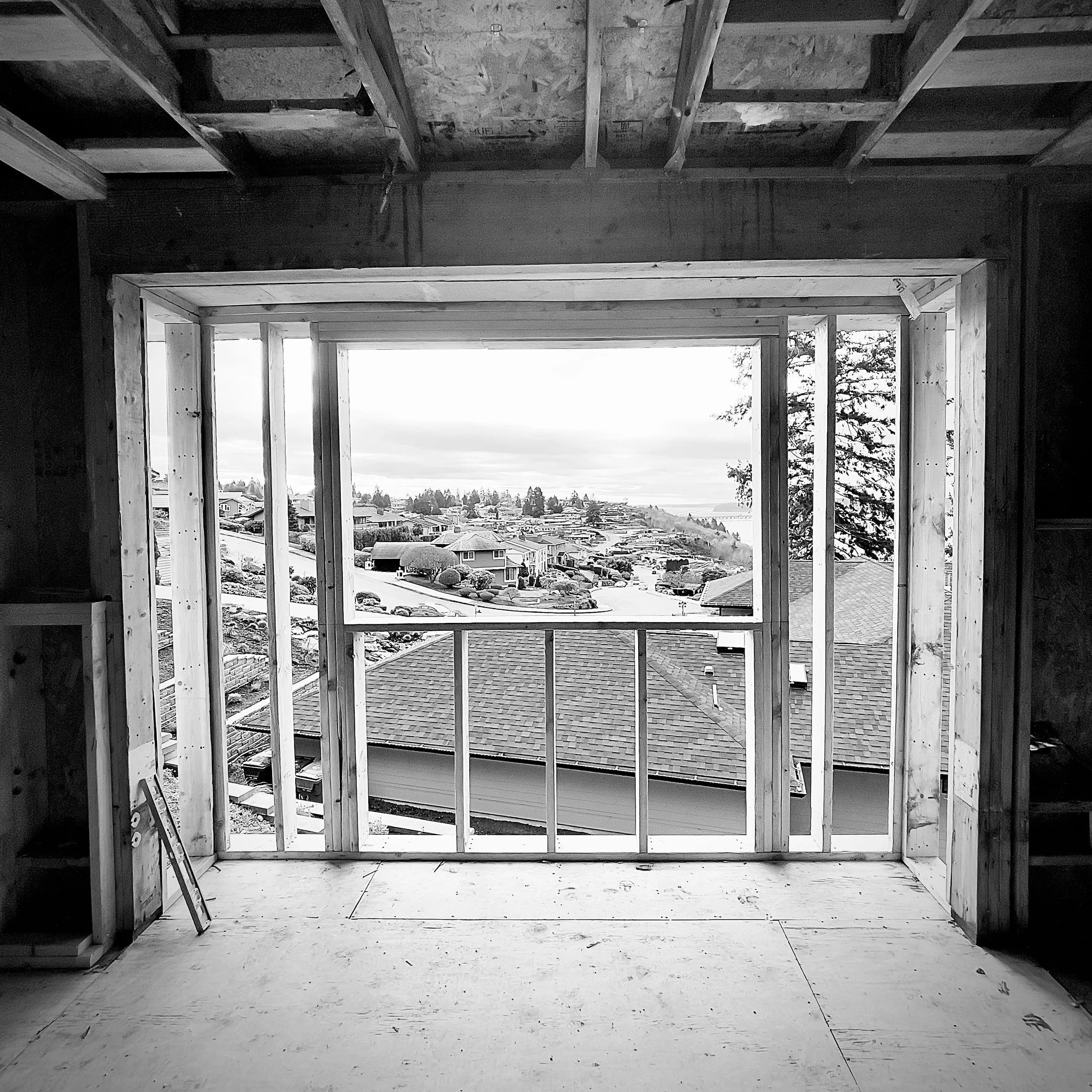
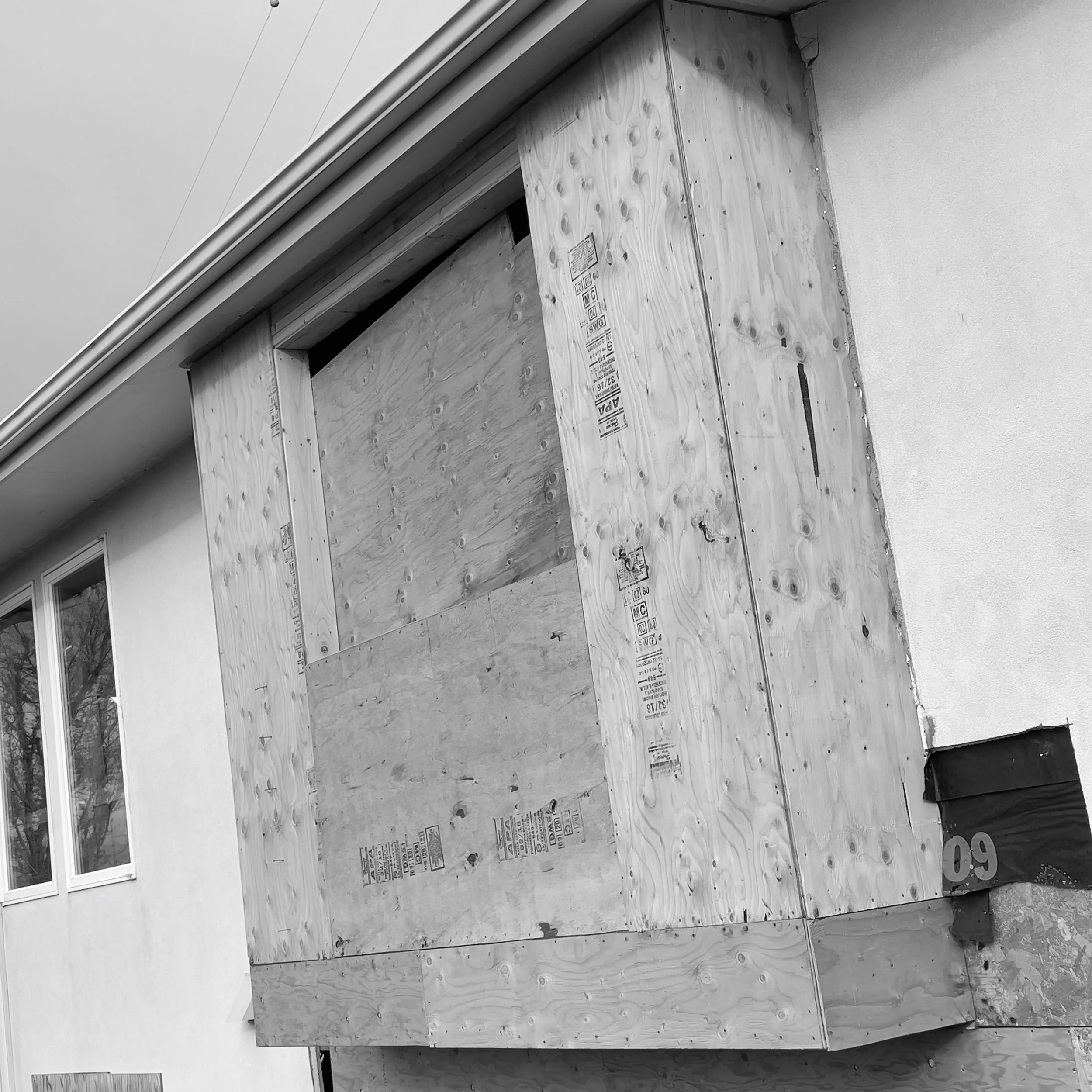
This project also includes the design and framing of multiple bay window assemblies, each integrated into the existing structure with clean geometry and full structural support. The work establishes new framing lines, installs sheathing, and prepares each opening for finish integration.
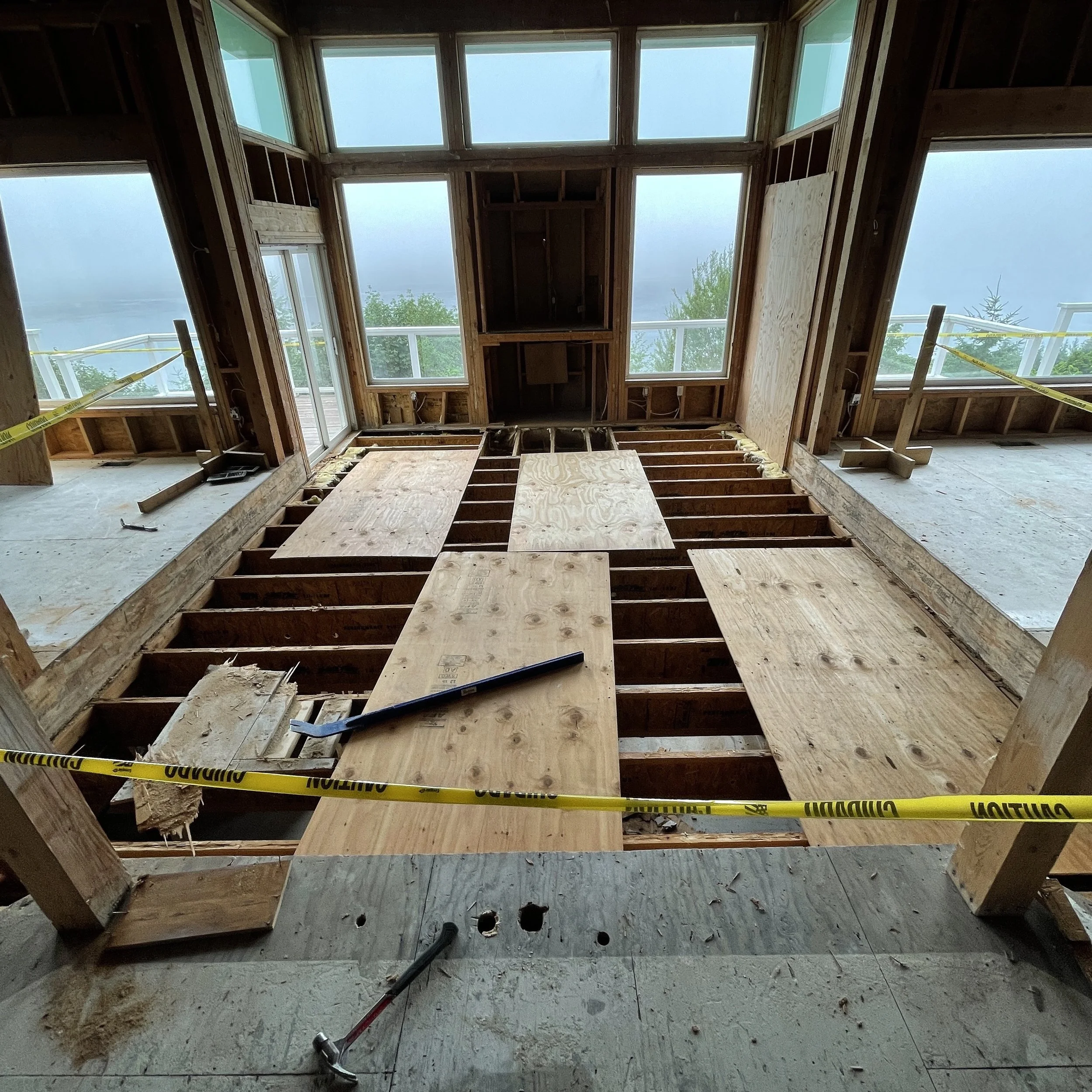
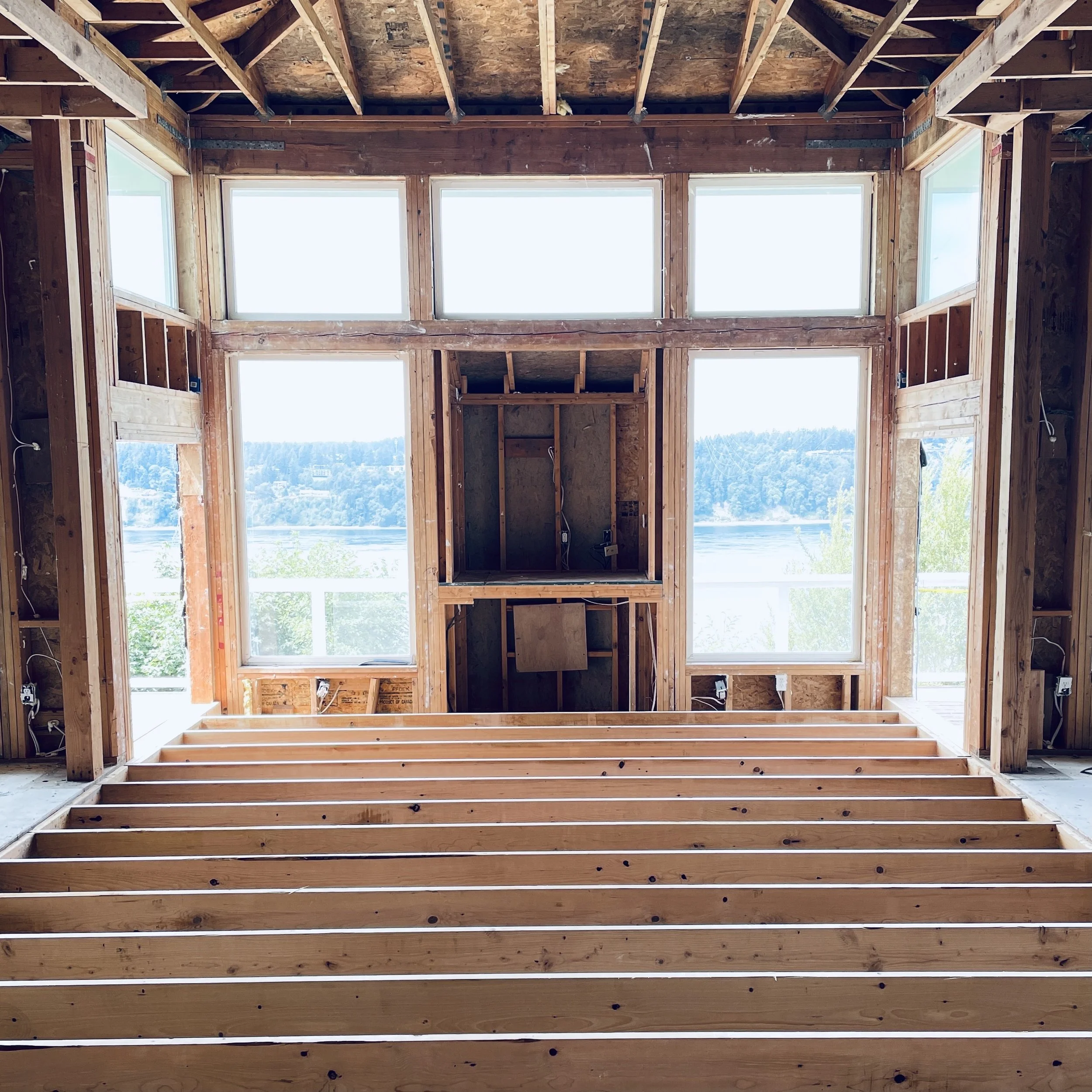
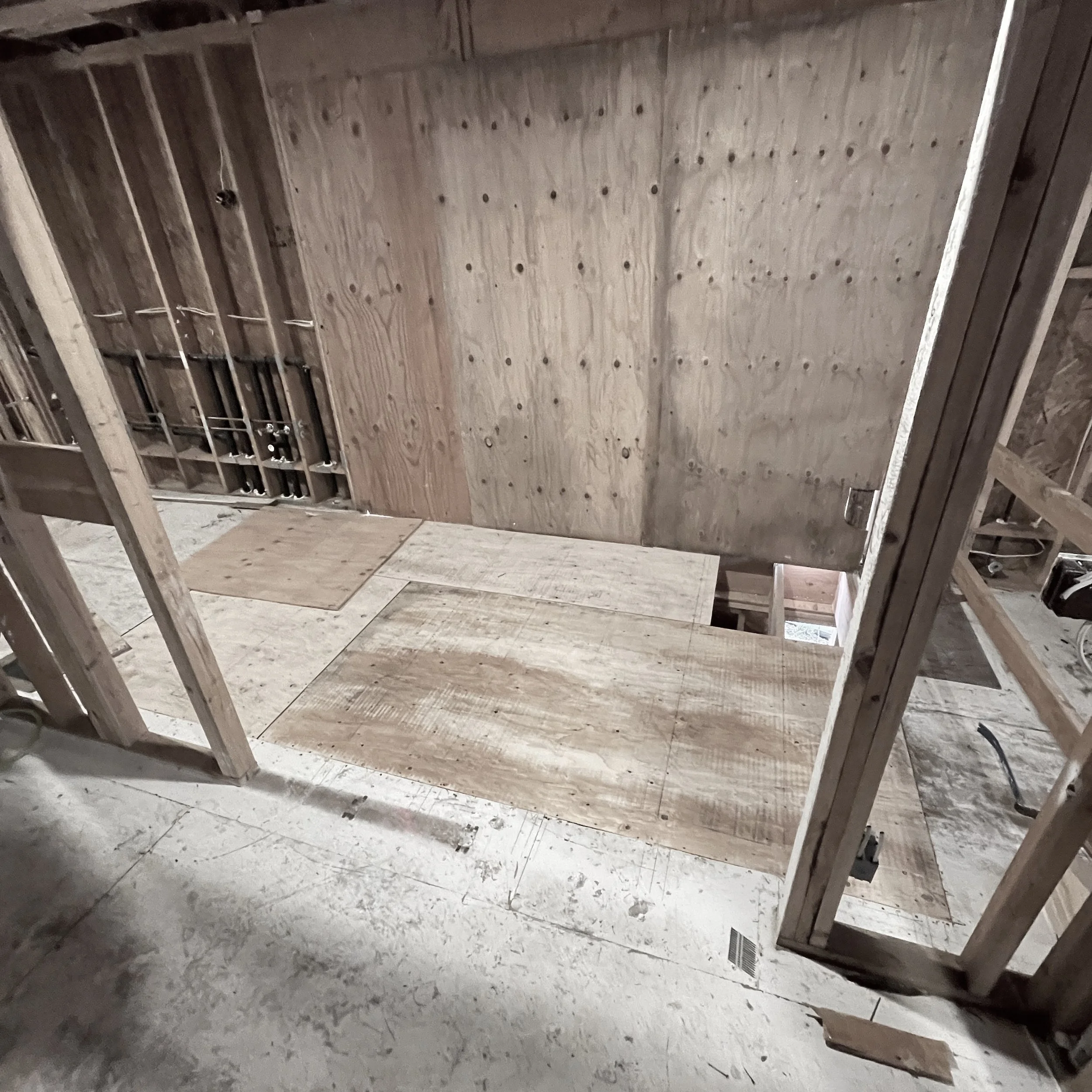
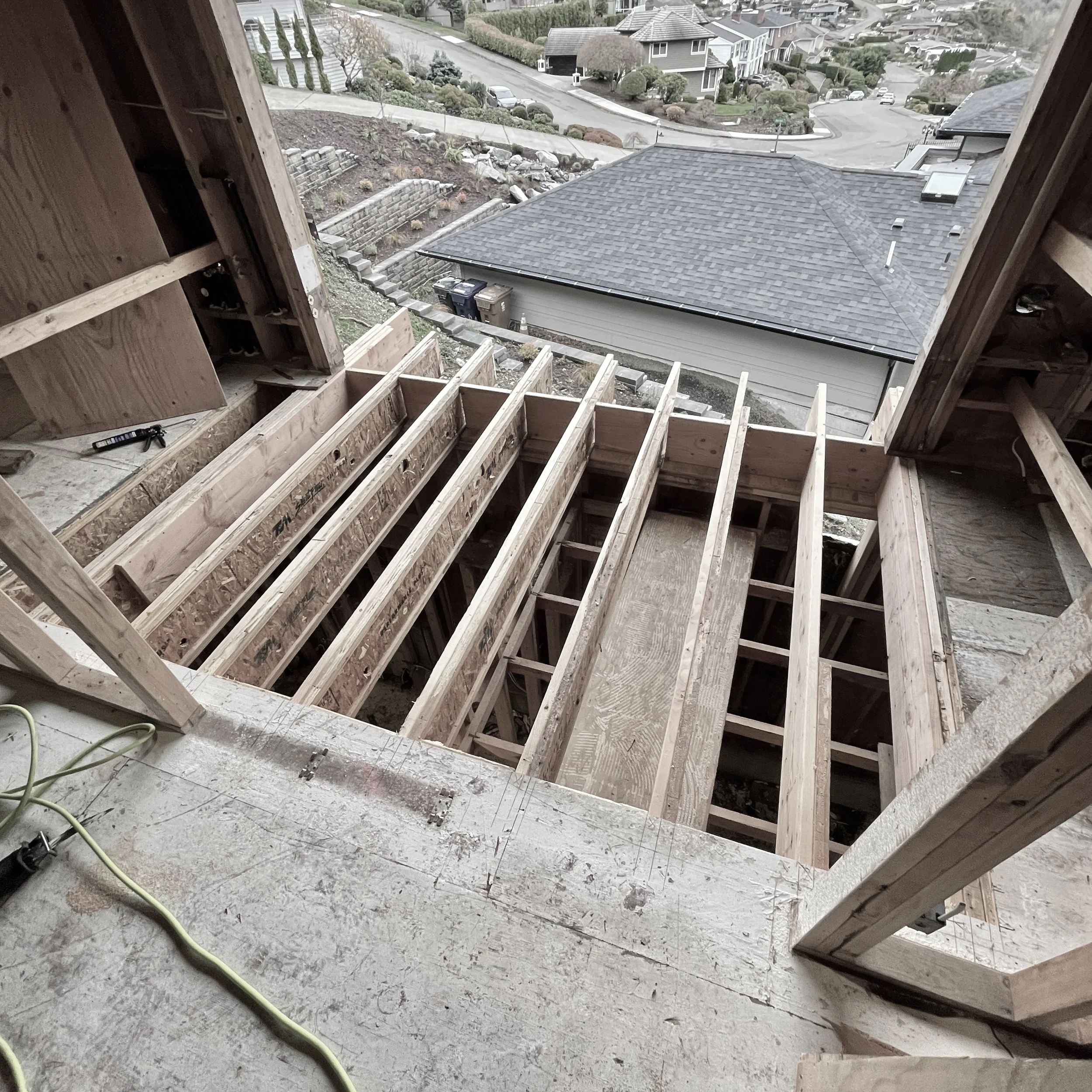
In parallel, a 20' x 12' section of the main floor was fully rebuilt. The process removed compromised material and introduced new joists, blocking, and subfloor across the span. Each section was brought back into plane, tied into adjacent framing, and secured to create a solid, continuous floor system.
This project connects directly to the upcoming Stein Project. The same principles apply: understand the structure as a system, define the sequence, and execute each phase with clarity. Large, complex scopes resolve into smaller, controlled operations—each one manageable, measurable, and grounded in experience. Structural work, framing, temporary support, layout, and installation all exist within the same continuum of skills.
Fun job.
This is how the work is approached at Trufabricator. Each project breaks down into clear phases that align with real, hands-on experience. The scope becomes a series of known operations, each one executed with precision and intent. The strategy is simple and effective: take on complex work by reducing it into well-understood components and deliver each one cleanly.
I’ve worked across nearly every part of construction—framing, structural integration, layout, coordination, problem-solving in the field. Now that I’m running my own operation, the structure of the work reflects that full range of experience. Every decision,sequence, and execution step comes from direct knowledge of how these systems behave in real conditions. And I keep my bags on.
And now I get to yell at myself if anything slips—which, honestly, keeps things running pretty tight.